



































Senate confirms chairman of joint chiefs as GOP senator still blocking hundreds of military nominees
Senate confirms chairman of joint chiefs as GOP senator still blocking hundreds of military nominees
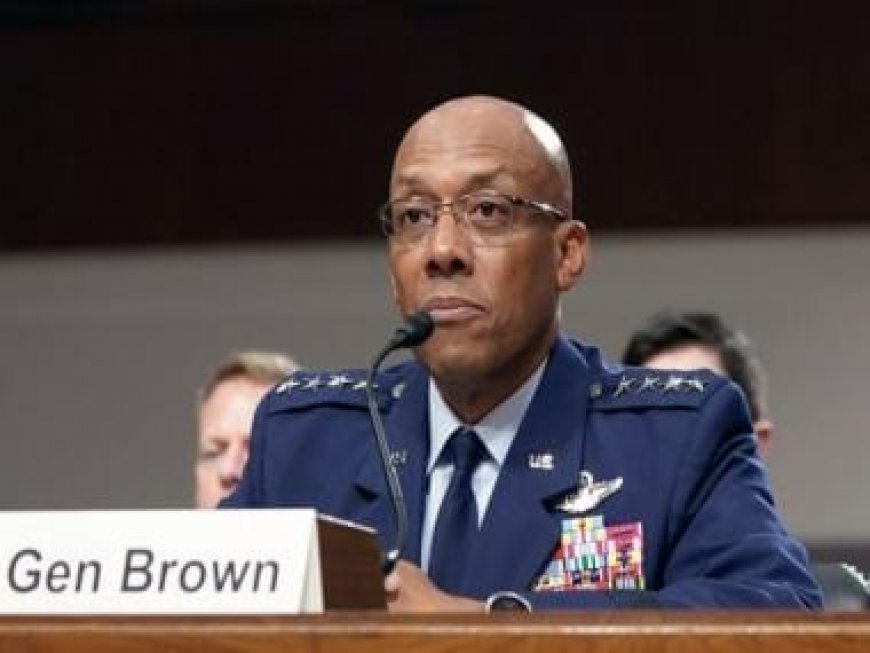
The Senate approved Gen. CQ Brown as the next chairman of the Joint Chiefs of Staff on Wednesday, putting him in place to replace Gen. Mark Milley, who retires at the end of the month.
Brown’s confirmation on an 83-11 vote comes months after President Joe Biden nominated him for the position, and comes as Democrats try to get past Alabama Sen. Tommy Tuberville’s hold on hundreds of appointments over the Pentagon’s abortion policy. This week, the Senate is also anticipated to approve Gen. Randy George as Army Chief of Staff and Gen. Eric Smith as Commandant of the United States Marine Corps.
Tuberville has been obstructing the Senate’s usual practice of confirming military appointments in groups, aggravating Democrats who had previously stated that they would not go through the time-consuming process of bringing individual nominations up for a vote. More than 300 nominations remain delayed as a result of Tuberville’s blockage, and confirming them one at a time would take months.
But, on Wednesday, Senate Majority Leader Chuck Schumer, D-New York, switched direction and tried to force votes on Brown, George, and Smith.
“Senator Tuberville is forcing us to face his obstruction head-on,” Schumer said. “I want to make clear to my Republican colleagues — this cannot continue.”
Tuberville did not object to the confirmation votes, saying he would maintain his holds but is fine with bringing up nominations individually for roll call votes.
White House national security spokesman John Kirby said that Brown’s confirmation, along with expected votes on Smith and George, is positive news. But “we should have never been in this position,” he said.
“While good for these three officers, it doesn’t fix the problem or provide a path forward for the 316 other general and flag officers that are held up by this ridiculous hold,” Kirby told reporters.
Brown, a career fighter pilot, was the Air Force’s first Black commander of the Pacific Air Forces and most recently its first Black chief of staff, making him the first African American to lead any of the military branches. His confirmation will also mark the first time the Pentagon’s top two posts were held by African Americans, with Defense Secretary Lloyd Austin as the top civilian leader.
In a statement late Wednesday, Austin said Brown would be a “tremendous leader” as the new chairman.
Brown, 60, replaces Joint Chiefs Chairman Army Gen. Mark Milley, who is retiring after four decades in military service. Milley’s four-year term as chairman ends on Sept. 30.
Tuberville said on Wednesday that he will continue to hold up the other nominations unless the Pentagon ends its policy of paying for travel when a service member has to go out of state to get an abortion or other reproductive care. The Biden administration instituted the policy after the Supreme Court overturned the nationwide right to an abortion and some states have limited or banned the procedure.
“Let’s do one at a time or change the policy back,” Tuberville said after Schumer put the three nominations up for a vote. “Let’s vote on it.”
In an effort to force Tuberville’s hand, Democrats had said they would not bring up the most senior nominees while the others were still stalled. “There’s an old saying in the military, leave no one behind,” Senate Armed Services Chairman Jack Reed said in July.
But in a frustrated speech on the Senate floor, Schumer said Wednesday he was left with no other choice.
“Senator Tuberville is using them as pawns,” Schumer said of the nominees.
The votes come as a host of military officers have spoken out about the delays’ damage to service members. While Tuberville’s holds are focused on all general and flag officers, they carry career impacts on the military’s younger rising officers. Until each general or admiral is confirmed, it blocks an opportunity for a more junior officer to rise.
That affects pay, retirement, lifestyle and future assignments — and in some fields where the private sector will pay more, it becomes harder to convince those highly trained young leaders to stay.
“Senator Tuberville’s continued hold on hundreds of our nation’s military leaders endangers our national security and military readiness. It is well past time to confirm the over 300 other military nominees,” Austin said, noting he would “continue to personally engage with members of Congress in both parties until all of these well-qualified, apolitical officers are confirmed.”
Tuberville said he has not talked to Austin since July about the holds.
The blockade has frustrated members on both sides of the aisle, and it is still unclear how the larger standoff will be resolved. Schumer did not say if he would put additional nominations on the floor.
The monthslong holds have devolved into a convoluted procedural back and forth recently.
Tuberville claimed victory after Schumer’s move, even though the Pentagon policy remains unchanged.
“We called them out, and they blinked,” he told reporters of Schumer.
What's Your Reaction?